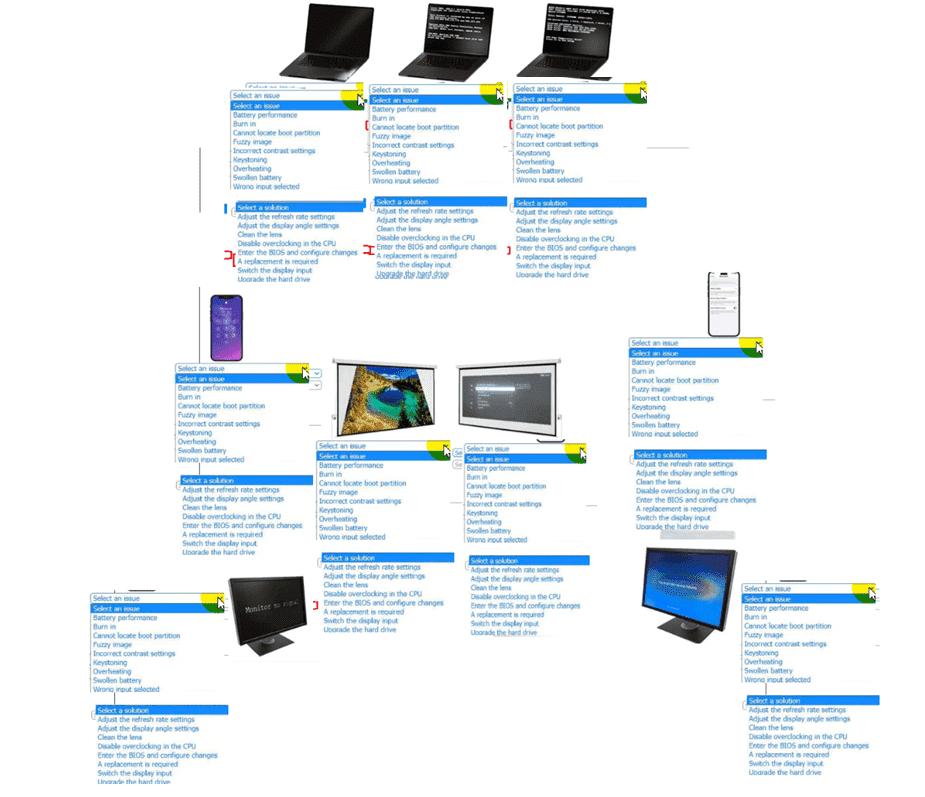
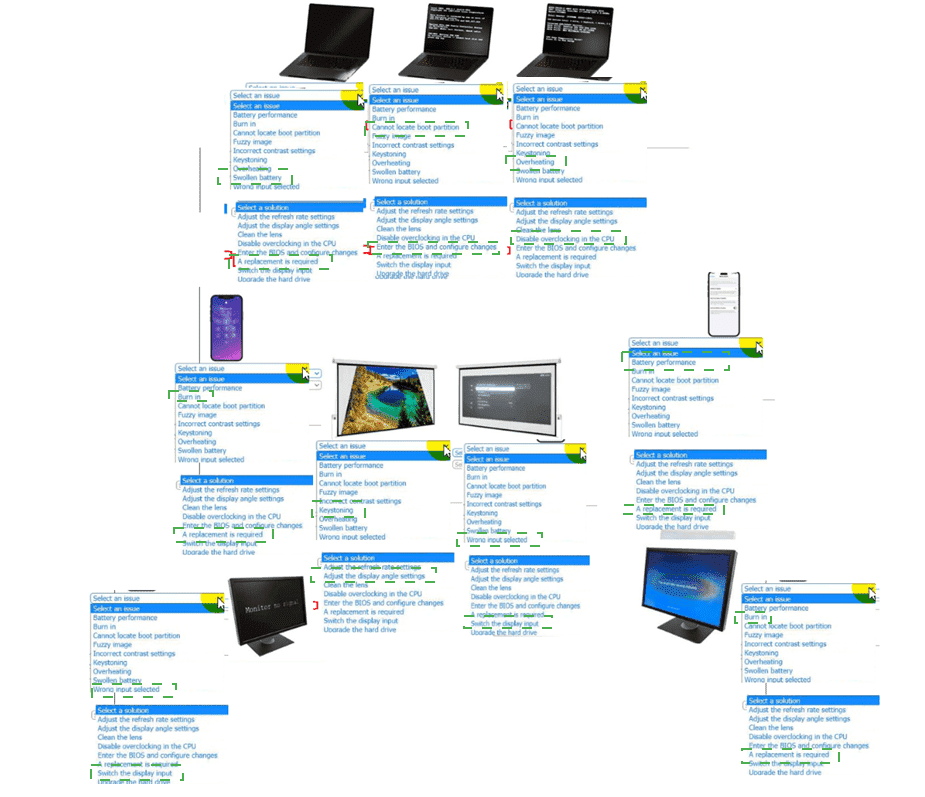
Question 1
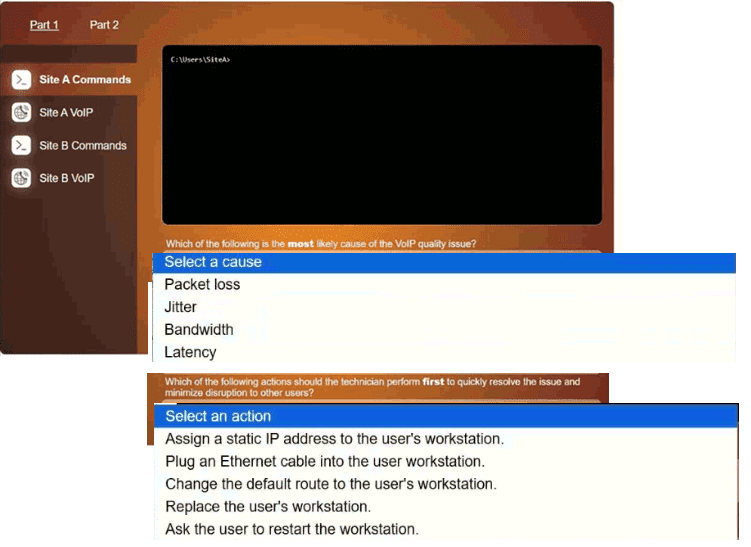
User at site A is reporting dropped VolP calls when using a softphone application.
However, users at site B are not experiencing any issues. The VolP provider has a tool to troubleshoot connectivity Issues.
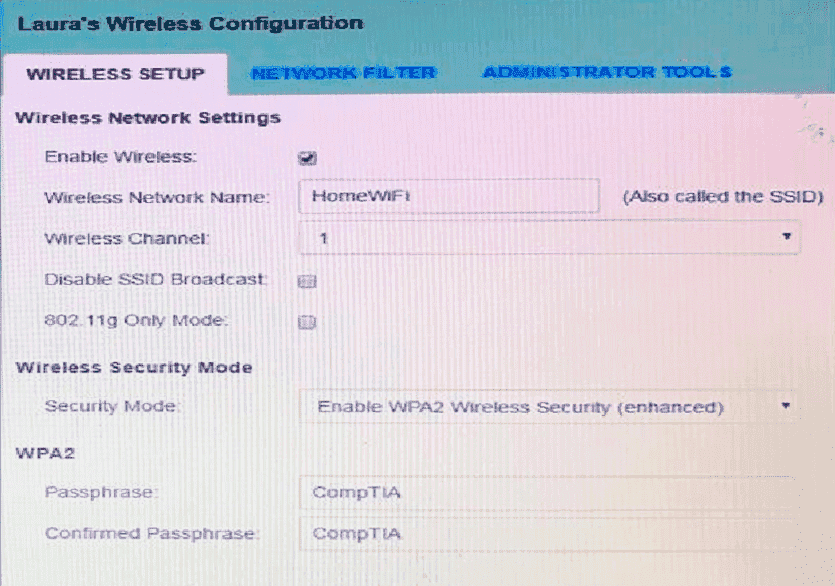
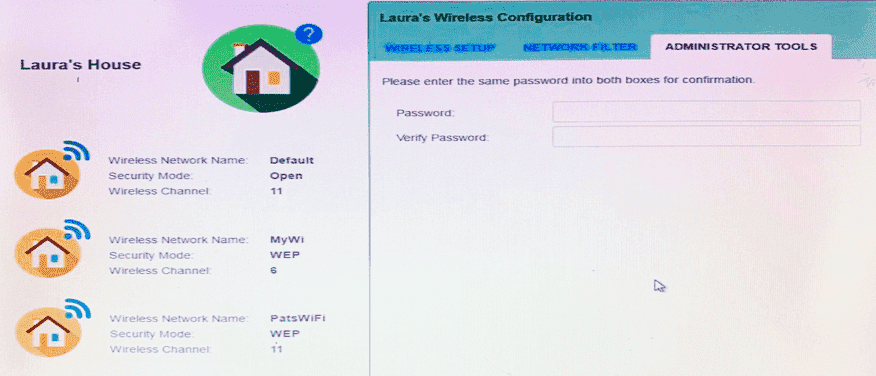
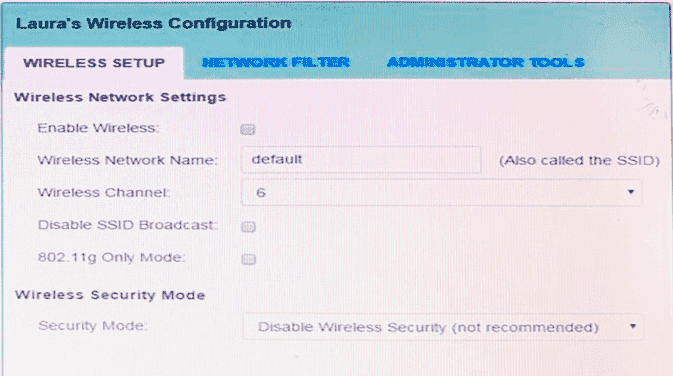
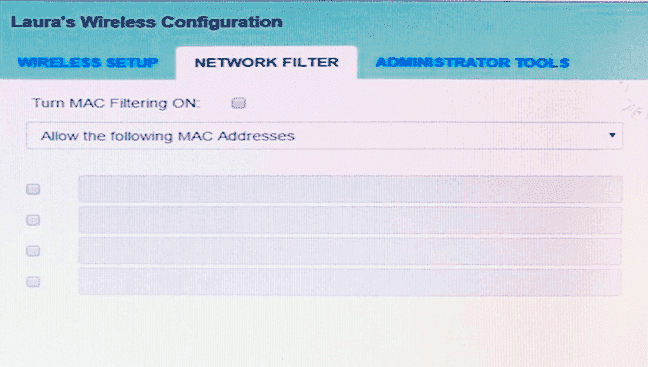
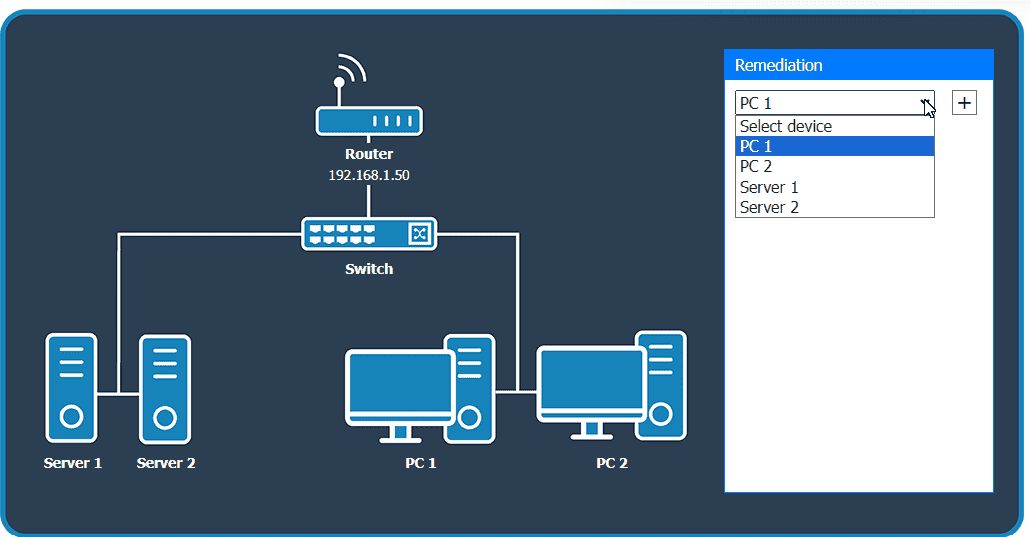
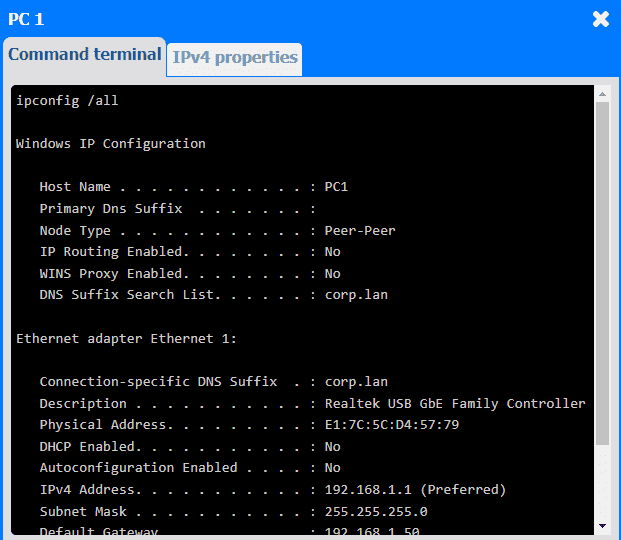
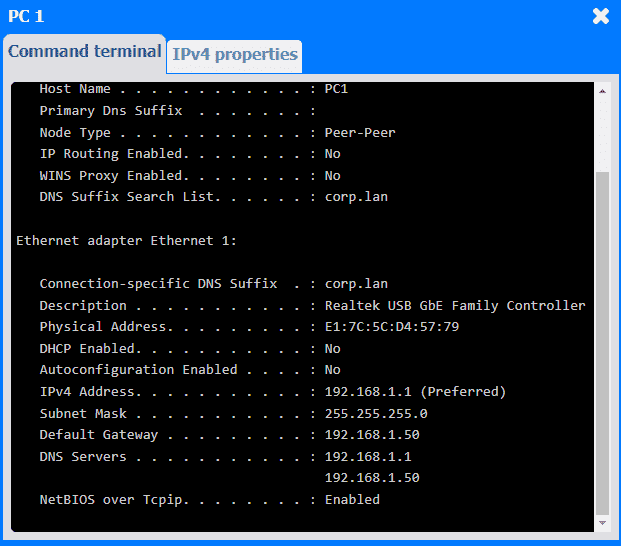
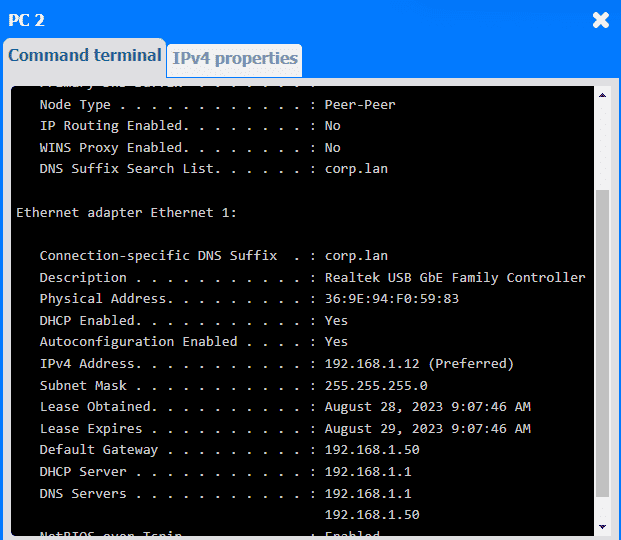
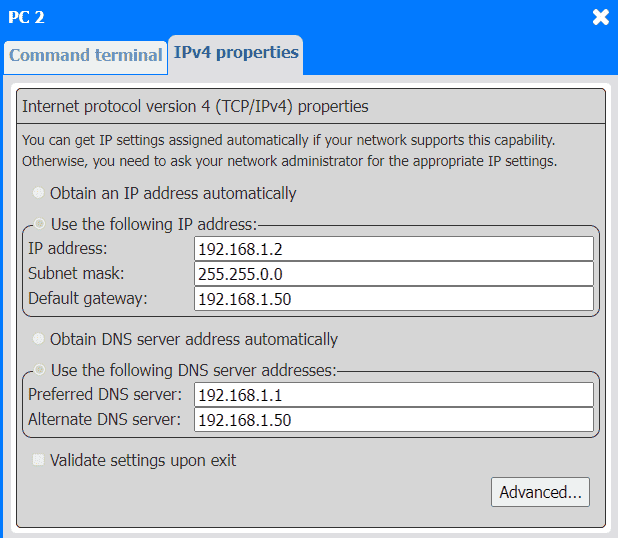
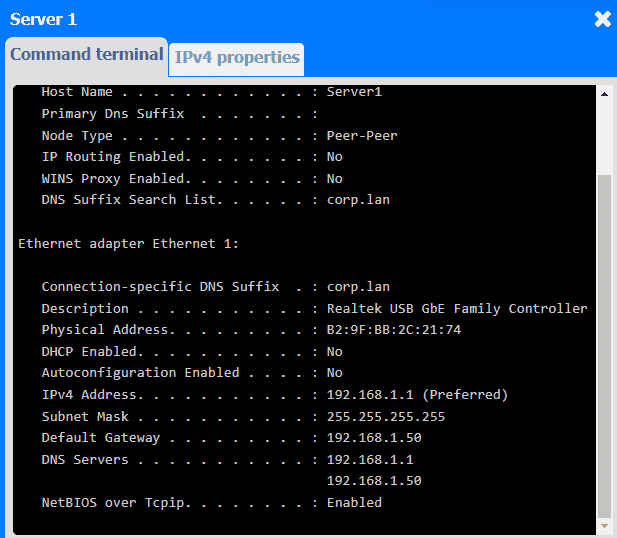
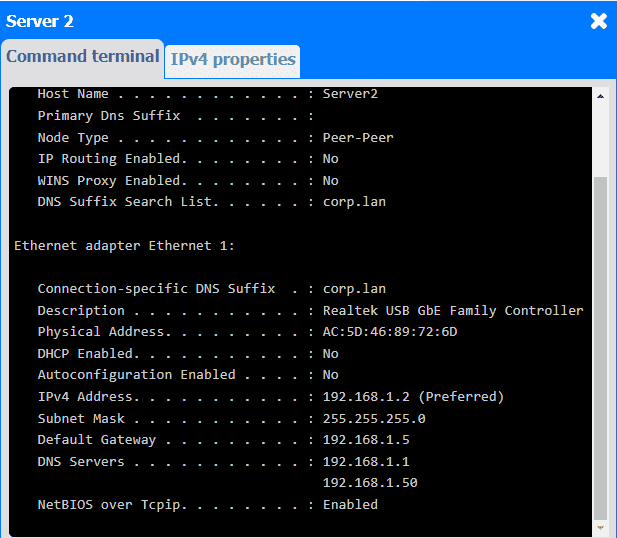
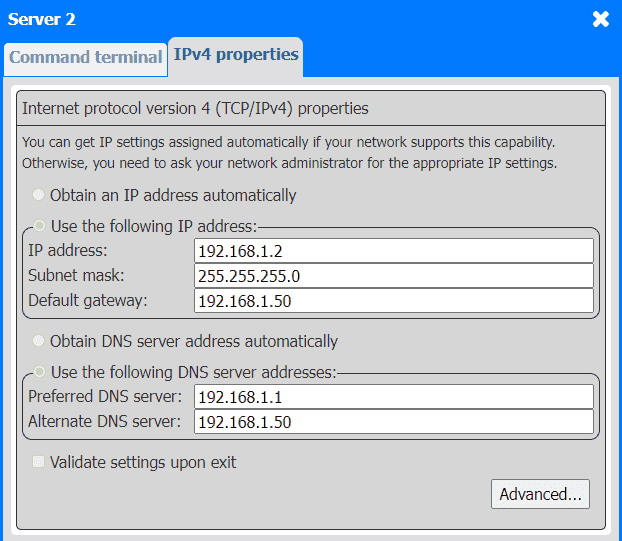
Click on each tab to investigate the cause of the dropped calls. In Part 1, type help in each terminal to view a list of available commands. Then, select the correct answer for each question. In Part 2, make unnecessary network configuration changes to resolve reported issue.
However, users at site B are not experiencing any issues. The VolP provider has a tool to troubleshoot connectivity Issues.
Click on each tab to investigate the cause of the dropped calls. In Part 1, type help in each terminal to view a list of available commands. Then, select the correct answer for each question. In Part 2, make unnecessary network configuration changes to resolve reported issue.
 Explanation:
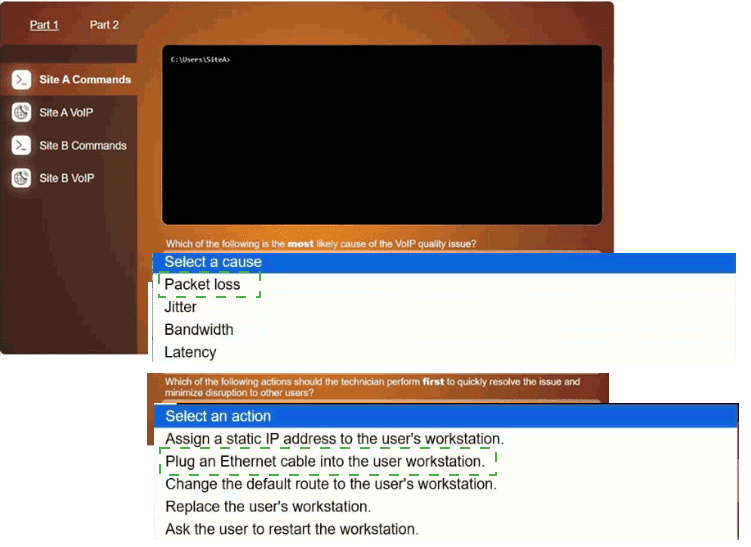
Jitter is the variation in packet arrival timing, and it is the most likely cause of dropped VoIP calls at Site A while Site B remains unaffected. VoIP is extremely sensitive to timing inconsistencies; it expects voice packets to arrive at a steady, predictable rate. When packets experience variable delays due to network congestion, buffer bloat, or unstable routing at Site A's local network, the jitter buffer overflows or underflows, causing audio gaps, choppy sound, and ultimately call drops. Site B functions correctly, confirming the issue is isolated to Site A's network path.
Why other options are less likely:
Packet loss:While packet loss can cause issues, it typically results in audio gaps rather than complete call drops unless severe.
Bandwidth: Insufficient bandwidth would cause congestion symptoms for all users at Site A, not just VoIP, and likely affect Site B similarly.
Latency: High latency causes echo or delay but rarely drops calls by itself.
Reference:
CompTIA A+ Core 1 (220-1201) Objective 2.4: "Given a scenario, configure wireless networking... VoIP quality issues include